
Two decades on, New Found Glory’s most unexpected album still feels like the record they had to make
There are certain albums that arrive at exactly the wrong moment.
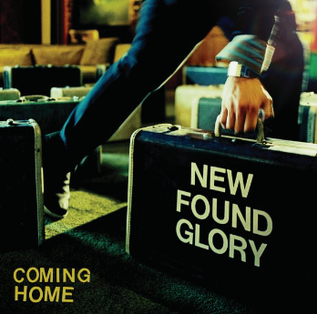
For New Found Glory, Coming Home was one of them.
Released on September 19, 2006, the band’s fifth studio album landed after they had spent the first half of the decade helping define mainstream pop-punk. Sticks and Stones had turned them into one of the biggest names in the scene, while 2004’s Catalyst pushed them further into the mainstream, reaching No. 3 on the Billboard 200.
Then came Coming Home.
The guitars were still there. The choruses were still enormous. Jordan Pundik was still unmistakably Jordan Pundik. But the sprint had slowed to a walk. Piano appeared. Strings appeared. The production became warmer and more organic. The songs sounded less like five guys trying to soundtrack a teenage Friday night and more like a band beginning to wonder what happened after the credits rolled.
Twenty years later, that change is arguably what makes Coming Home so fascinating.
The album nobody quite expected
By 2006, New Found Glory had a formula that worked.
The band had emerged from the South Florida punk scene with a potent combination of hardcore energy, huge melodic hooks and songs about relationships, friendship and the emotional chaos of being young. Their self-titled album, Sticks and Stones and Catalyst had progressively expanded that sound without abandoning its core.
But Catalyst had also represented something of a crossroads.
Instead of simply making Catalyst again, the band decided to completely change the way they approached the next record.
Rather than writing songs between shows and working around the demands of touring, the members rented a house in Malibu and essentially moved in together to concentrate on songwriting. They spent around two months living and working there, writing throughout the day and night.
It was an unusually deliberate process for a band whose earlier records had been built around momentum.
And the results were different.
Very different.
Coming home to Malibu
The album’s title turned out to be more than a convenient phrase.
The songs were increasingly concerned with relationships, responsibility, family and the idea of returning to the people and places that matter. The band themselves described the record as being more positive than previous material, with Chad Gilbert talking at the time about its focus on taking responsibility and coming home to the people you love.
That change in perspective was reflected musically.
Coming Home was recorded at Groove Masters in Santa Monica and produced by the band alongside Thom Panunzio, a veteran producer whose credits included artists such as Tom Petty, Bruce Springsteen and Ozzy Osbourne.
Panunzio wasn’t brought in simply to make New Found Glory sound like somebody else. Instead, he helped them explore what was already beginning to emerge from the songwriting.
The result was an album with considerably more space.
There are pianos and keyboards. There are strings. There are layered vocals. There are moments where the guitars aren’t fighting to occupy every inch of the mix.
And yet, underneath all of that, this is still New Found Glory.
The hooks haven’t disappeared.
They’ve just grown up.
“It’s Not Your Fault”
The obvious entry point is “It’s Not Your Fault”, the album’s lead single.
On paper, it sounds like a strange choice for a band whose biggest songs had been built around explosive guitars and instantly recognisable pop-punk energy. But it makes perfect sense within Coming Home.
The song’s piano-led opening and expansive arrangement immediately establish the album’s new territory, while the chorus retains the enormous melodic payoff that had always been one of NFG’s greatest strengths.
It wasn’t a reinvention so much as a widening of the palette.
And that distinction is important.
New Found Glory didn’t suddenly become an indie-rock band. They didn’t abandon punk. They simply allowed themselves to write songs that weren’t required to hit the accelerator every thirty seconds.
“Oxygen” and the new NFG
Opening the album with “Oxygen” was another statement of intent.
It’s not the kind of opening track that immediately throws you through a wall.
Instead, Coming Home eases you into its world.
That was always going to be difficult for existing fans.
If you had arrived at New Found Glory through “Hit or Miss”, “My Friends Over You” or “All Downhill From Here”, you knew exactly what you expected when you pressed play on a new record.
Coming Home challenged that expectation from its opening moments.
The guitars were less aggressive. The tempos were more considered. The arrangements were bigger in a different way.
And some fans simply weren’t interested.
The backlash
It’s easy to forget now just how strange Coming Home seemed in 2006.
New Found Glory were one of the biggest bands associated with the pop-punk boom. They had a recognisable sound, a recognisable audience and a very recognisable place within the scene.
Then they released their least “pop-punk” album.
Some contemporary reviews were enthusiastic. Scene Point Blank gave the record a glowing 9/10, praising its more mature songwriting and melodic approach.
Others were considerably less impressed.
The criticism wasn’t difficult to understand. For some listeners, the record simply wasn’t energetic enough. For others, the attempt at maturity came across as overproduced or overly sentimental.
And commercially, it didn’t replicate the success of Catalyst. Coming Home would ultimately become the band’s final album for Geffen Records.
In the context of 2006, it was easy to see the album as a band stepping away from the sound that had made them successful.
With hindsight, it’s more interesting to see it as a band testing how far that sound could stretch.
The songs that aged best
Perhaps the most revealing thing about Coming Home is that its strongest songs aren’t necessarily the ones that make the biggest immediate impression.
“Hold My Hand” is a great example.
It has the enormous chorus you’d expect from NFG, but the arrangement gives the song room to breathe. The same is true of the title track, which builds around a deceptively simple melodic idea before opening into one of the album’s most memorable choruses.
Then there’s “When I Die”.
It’s one of the record’s emotional centres, written by Chad Gilbert following the death of his father.
That kind of subject matter represents just how far the band had travelled from the teenage relationship dramas that populated their earlier records.
The emotional stakes were different now.
So were they.
“Boulders”
And then there is “Boulders”.
If you want one song that demonstrates exactly what New Found Glory were attempting with Coming Home, this is probably it.
The arrangement expands beyond the band’s usual template, incorporating strings, organ and additional vocals before building toward a much bigger finale.
It’s ambitious.
Maybe too ambitious for some listeners.
But that’s part of the appeal.
This is a band that had spent years being very good at making one particular kind of record deciding that being comfortable wasn’t enough.
The album’s secret weapon: the melodies
Strip away the piano.
Strip away the strings.
Strip away the more polished production.
What remains is the fundamental reason Coming Home works: New Found Glory were exceptionally good at writing melodies.
That never changed.
Contemporary and retrospective reviews have repeatedly picked up on that quality. AllMusic noted that although the record was more mature and relaxed, it remained packed with infectious songs and the band’s characteristic personality.
That’s why Coming Home has survived.
It isn’t a failed attempt at becoming a different band.
It’s a New Found Glory record where the band allowed themselves to slow down.
A record that needed time
Perhaps the biggest difference between 2006 and 2026 is patience.
In 2006, if you were expecting another Sticks and Stones, Coming Home could feel like a disappointment.
Listen to it now, without that expectation, and its strengths are much easier to appreciate.
The record doesn’t need to compete with “My Friends Over You”.
It doesn’t need to be Catalyst.
It doesn’t even need to prove that New Found Glory were still a pop-punk band.
It simply needs to be what it is.
A transitional record.
A reflective record.
And, in many ways, a remarkably brave record.
Even the band themselves have subsequently recognised its importance. In a retrospective ranking, the album was described as a particularly bold move for a band who were among the biggest names in pop-punk at the time. The record’s piano-driven and more expansive approach was described as something that proved they could make whatever kind of music they wanted, regardless of mainstream expectations.
That’s a pretty good legacy.
Twenty years later
Two decades after its release, Coming Home no longer feels like the awkward detour in New Found Glory’s catalogue.
It feels like a snapshot.
A moment when a hugely successful pop-punk band realised that getting older didn’t necessarily mean abandoning everything that had made them successful.
It meant figuring out what else they could do with it.
The irony is that the album’s title has become increasingly appropriate with age.
In 2006, “coming home” sounded like a band looking backwards.
Twenty years later, it sounds like a band arriving somewhere.
The pop-punk explosion of the early 2000s has long since passed. The people who bought Sticks and Stones as teenagers are now old enough to have mortgages, families, careers and memories of their own.
And Coming Home has quietly become the New Found Glory record that makes more sense to those people.
It isn’t the fastest album they’ve made.
It isn’t the heaviest.
It isn’t necessarily the one that first comes to mind when you think of New Found Glory.
But perhaps that’s precisely why it has endured.
Because underneath the piano, strings and slower tempos, the same thing that powered the band’s earliest records is still there:
big songs about real feelings, delivered with enormous hooks.
Twenty years later, Coming Home still sounds like New Found Glory.
They just finally had somewhere to go home to.
Leave a Reply