
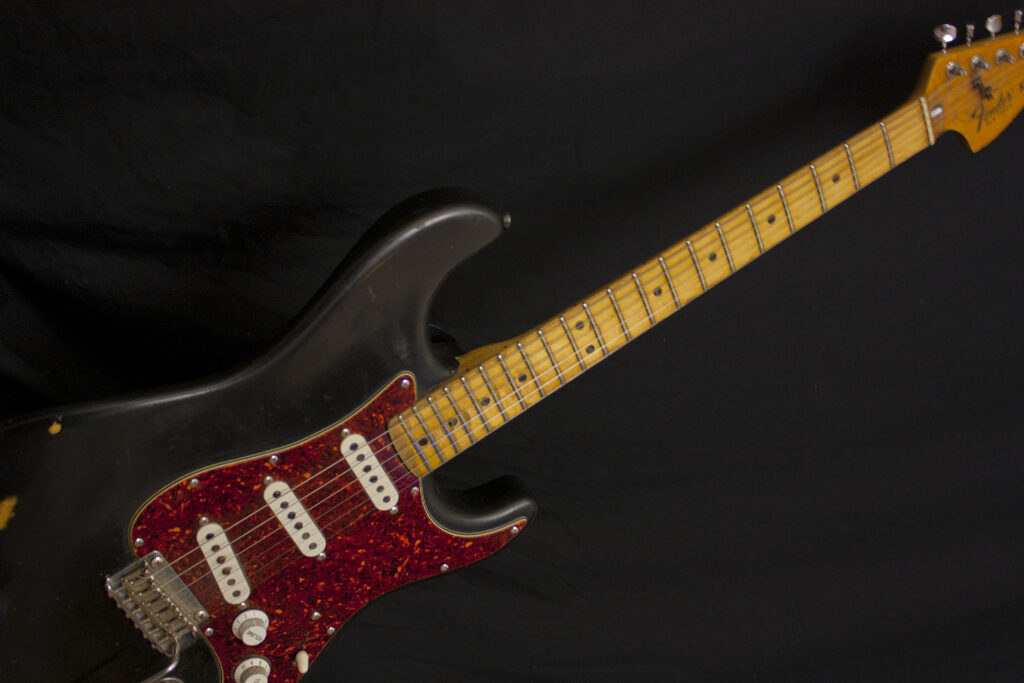
Fender has recently found itself surrounded by controversy. This follows them winning a landmark case in Germany, granting them legal protection over the Stratocaster’s body shape. They then began to go after other guitar manufacturers, such as PRS, Yamaha and Harley Benton.
You might find yourself asking: aren’t they right to be doing this? Well, this court case comes after Fender lost the Trademark over the Stratocaster back in 2009 in the US. In fact, it actually goes back further than this, as Fender failing to enforce its claim over the ‘S’Style’ shape is what led to them losing the case, and therefore the Trademark.
Fender, up until recently, never fought against other manufacturers who made an ‘S-Style’ body – that is a guitar body with the Stratocasters signature double cutaway design. This has led to countless guitar makers -from small scale luthiers, to large industrial manufacturers- viewing the design as fair game. This is why the likes of PRS, Yamaha, and Harley Benton have spent millions over the years designing, refining and producing ‘S-style’ bodies.
To fully understand why so many companies felt safe to replicate the Stratocaster, it is important to understand the series of events that made it possible for Fender to stake their claim over the design.
Fender released the Stratocaster in 1954, its key features being a double-cutaway contoured body, 3 pickups and a synchronised tremolo. It instantly became a hit, due to its improved ergonomics and versatile sound. This, of course, inspired many other makers to produce their own versions of the Stratocaster body. So many, in fact, that Fender even called these replicas in their own official publishing materials.
Through the 1970s and 80s, Fender referred to the Stratocaster as “the most imitated guitar in the world”. Fender during this period wasn’t fighting litigation battles – it was reveling in the fact that it had produced the most influential guitar in decades. In the 80s, Fender even asked potential customers “Why buy a Copy when you can afford the original” and told its customers that “you can play an original or you can end up with one of the many copies”. In this period it also discounted much of its opposition, stating that “unfortunately, many guitar and accessory companies have been more concerned with offering you a look-alike”. This fighting talk continued into the 90s, with Fender highlighting “You’re not taken in by look-alikes or by wild claims” in a Strat Ultra advertisement.
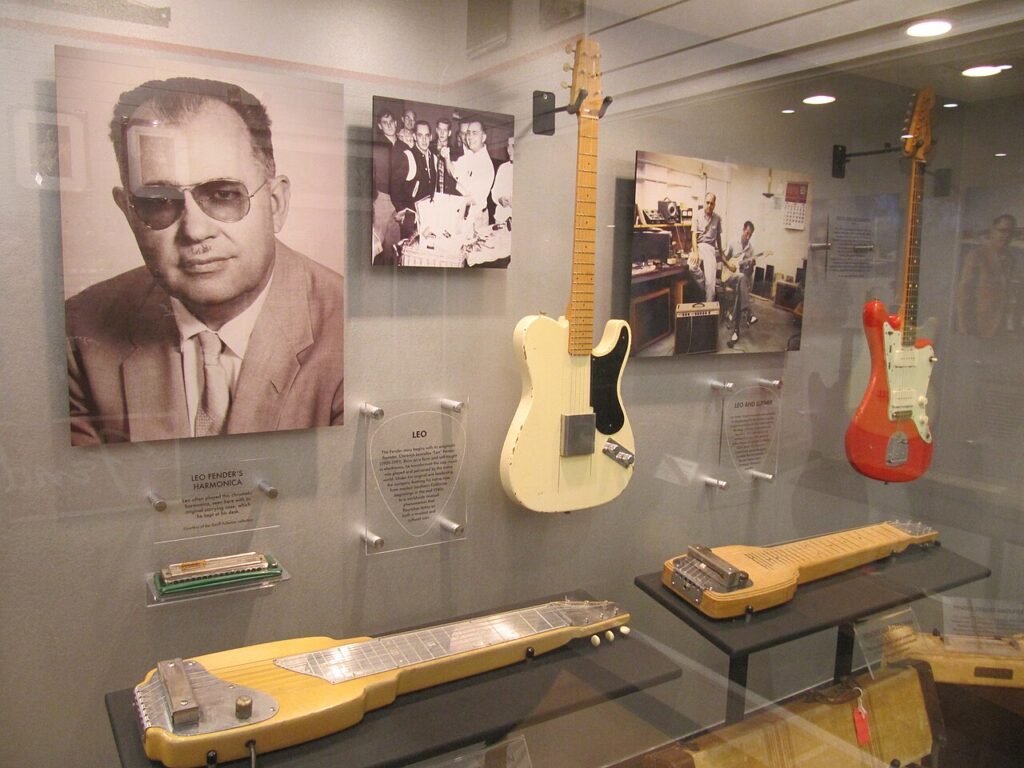
No where during this period does it seem like Fender even thought about fighting for its Trademark or Copyright claim over the body. And for Fender, that was its downfall. All of these snippets of promotional material were used against Fender in the US courts between 2003 and 2009, when it applied to protect a few of its models of guitar in the U.S. Trademark Trial and Appeal Board (TTAB).
In 2003, Fender applied to register the Stratocaster, Telecaster and Precision Bass guitar designs as Trademarks. As you can guess, this was met with a great deal of resistance from many manufacturers who produced and sold various ‘S-style’ bodies. These include ESP, Peavy, Warmoth and USACG. Their argument was that Fender had failed to maintain the Trademark of these instruments in the decades prior, and therefore the shapes of these guitars should be seen as generic.
In 2009, the TTAB ruled against Fender. It was concluded that Fender had lost its Trademark over these body shapes. This was due to Fender waiting too long to enforce the Trademark over their designs. The main reason for this ruling was that they had become generic. Due to the countless copies of the body style, these shapes no longer served as a way to identify the instruments as a Fender production alone. This voided any claim that they were a Trademark of Fender’s. This is almost entirely down to Fender not enforcing it earlier, allowing for other firms to begin copying these styles. It’s worth mentioning here that Tokai, ESP, Schecter, Yamaha, Warmoth and independent luthiers all were producing ‘S-Style’ bodies during this period – which overwhelmingly built the case against Fender’s claim that the body identified the guitars as a Fender solely through the shape of the guitar body.
So what does this mean for Fender? It meant that the Stratocaster, Telecaster and Precision bodies were fair game for others to replicate. It was a huge blow to Fender, but a massive win for the companies who were already producing designs based on these guitars. This allowed these manufacturers to continue selling the designs they have collectively invested millions to produce. The ruling did, however, still protect the names of the guitars, the Fender logo and the headstock shapes as a trademark.
Wait, so if Fender lost its Trademark case, how is it serving cease and desist letters to companies making ‘S-Style’ guitars?
Well, that question brings us to the recent court case in Germany. The major difference in this case is that Fender applied for Copyright protection of the Stratocaster, rather than seeking for them to be protected through a Trademark. This meant that the case focused on whether the “Stratocaster body is an original artistic creation” – meaning that the case looks at whether the design is sufficiently original and creative to quality as a protected work. It is not asking whether the body shape is enough to be recognisable as a Fender product.
This was the argument that Fender made against Yiwu Philharmonic Musical Instruments Co. in a landmark court case in Dusseldorf, Germany. Fender took the Chinese manufacturer to court over an ‘S-Style’ guitar body. Fender won the court case – uncontested – and finally had a concrete claim to the iconic double-cutaway contoured body of the Stratocaster. This was the first time that this protection had been given to a guitar body by the German court.
This is, in no small part, due to the fact that the Court of Justice of the EU has recently had a change of thinking when it comes to industrial products, and the way that copyright is applied to them. In late 2025, the Court of Justice passed a judgment on the Mio/Konektra case. This clarified that applied art can receive the same as paintings, sculptures and books – provided that they contain sufficient original creative expression. This instructed the courts to focus on whether the design reflects the author’s “free and creative choices” over pure function. This opened the door to other functional items to be given artistic protection.

This meant that when Fender took Yiwu Philharmonic Musical Instruments Co. to court, the Dusseldorf court ruled in favour of Fender. This is because the Stratocaster could now be seen as a functional piece of art, rather than just a piece of engineering. The first of its kind ruling from the Dusseldorf court that the iconic Stratocaster body was a copyrightable piece of art that was entitled to protection. This meant that the defendant was producing and selling a guitar that reproduced a protected artistic expression. As a result, Yiwu Philharmonic Musical Instruments Co. had to stop selling their guitar in Germany and the EU. It also handed Fender what they have been looking for for the last 20 years – a way to fight back against replicas of their now 70 year old design.
With the win under Fender’s belt, they have begun staking their claim for the Stratocaster body style. Their lawyers sprung into action serving cease and desist letters to makers far and wide, making claims against large industrial manufacturers and small scale luthiers alike. This includes Harley Benton, PRS and Yamaha, as well as numerous small scale makers. As the list grows, so does the ill feeling from firms who have been making ‘S-Style’ bodies for decades. It is certainly unprecedented for the guitar manufacturing world, and it is certainly steeped in controversy.
Why has this decision been so controversial?
Fender’s decision to finally enforce copyright laws on Stratocaster like guitars is controversial amongst musicians as it has been seen as an anti-consumer move by the guitar giant. It has also upset manufacturers who have invested millions into producing ‘S-style’ bodies over the last 70 years. But we covered that last week – you can read about this here.
The controversy that we will look at today is the court case itself. It is a tenuous position the Fender finds itself in – it won the case by default. Yiwu Philharmonic Musical Instruments Co. never actually presented a case at the EUJC, meaning that the court never heard arguments like:
- the design existed publically for 70 years
- countless manufacturers had already copied it
- the Trademark had not been upheld by Fender, and therefore had been lost (as we saw in the 2009 TTAB case)
However, Copyright is much stronger than Trademark. Copyright lasts for 70 years after the designer’s death. So, regardless of Fender failing to enforce and uphold its Trademark, the ruling may still be upheld even after an appeal or countersuit. If the verdict is upheld, it would mean that ‘S-Style’ guitars will have to be discontinued by other sellers, and opens the door for Telecaster, Jazz and Precision bodies to be covered by Copyright too. This would send shockwaves through the guitar manufacturing world. And that is exactly what Thomman is trying to avoid.
Thomann Countersuit
Thomann owns the guitar brand Harley Benton. A quick view of their online store shows just how heavily invested in Fenderesque instruments they are. Given that they have a lot to lose – through both their own productions and the stock that they are holding – it is no surprise that they are taking matters into their own hands.
Thomann has decided to contest the ruling of the Dusseldorf court, feeling that it has not been a fair trial. They claim that since the defendant never appeared, meaning Fender won by default, that there hasn’t been enough evidence considered. They will argue that since the Stratocaster shape has been used for decades by brands such as Suhr, Tom Anderson, PRS and Harley Benton, that the shape should not have Copyright protection. In essence, they are going to be saying that Fender has left it too late to begin claiming ownership over their shape.
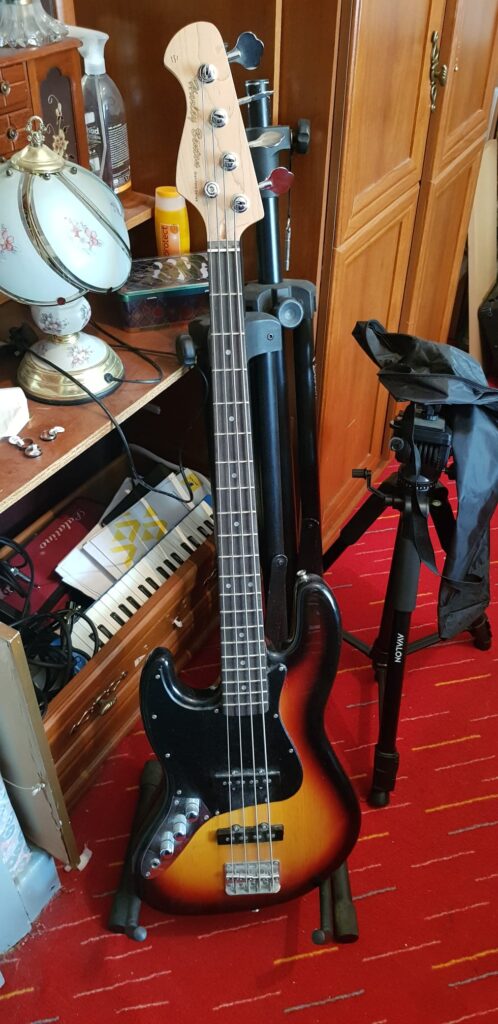
This will perhaps be strengthened by the argument that Fender is trying to enforce a ruling that did not exist in the decades where these brands were investing in a double-cutaway contoured body. It would simply be unfair to expect countless companies to scrap years of investment, innovation and production due to a change in the interpretation of the rules.
Thomann also claims that they are not just acting in their own interests: Its CEO, Hans Thomann, stated that many smaller builders cannot afford to challenge Fender individually, so Thomann wants the court to determine the issue once and for all. This would give greater certainty – especially since the case still has some unanswered questions:
- Is the Stratocaster body shape fully protected across the EU (like Fender’s cease and desists are trying to suggest)?
- What is the extent of the protection – how close to a Stratocaster does it need to be before it classes as copyright infringement?
- Does this ruling hold up to all companies, or does it only apply to Yiwu Philharmonic Musical Instruments Co. who the court ruled against?
More important than Fender’s earlier win?
Dusseldorf answered one question: “did this particular company infringe on Fender’s copyright?” Thomann’s case takes a look at the broader picture – does Fender’s case hold up when challenged? Given that this would be the first time that Fender has been challenged, the scope of the original ruling may be greatly reduced. We will likely see whether there are limitations placed on how close to a Stratocaster something has to be before Fender can take action against them. This would help other firms know what they can produce – in cases like this small changes have been known to have a huge impact on the outcome. This will give the legal certainty needed for other manufacturers to know what they can and can’t produce.
There are 3 outcomes to this case:
- Fender wins completely – there will no longer be ‘S-Style’ guitars on the market, except for the Stratocaster.
- Thomann wins – business as usual for the guitar world.They reach a compromise –
- Fender keeps the copyright of the Stratocaster, but limits are put in place for how close a copy can be.
Given how this will be the first time in court that Fender comes under scrutiny, it is believed that the case will be more important than the precedent set in the original Dusseldorf ruling, and potentially could reshape the whole of the guitar making world.
Leave a Reply